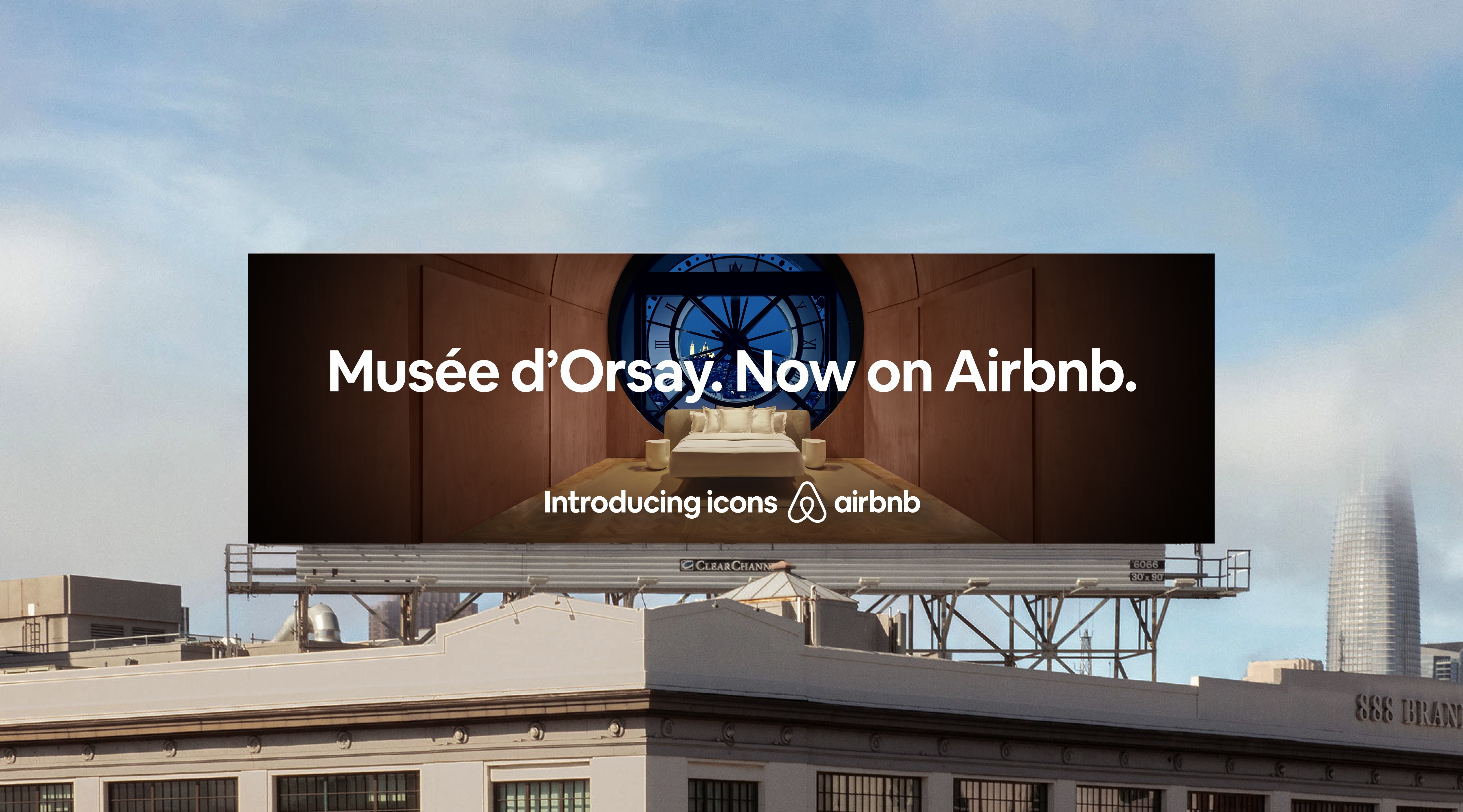
Airbnb: Icons
In May of 2024, Airbnb introduced a new Category called Icons, offering guests unparalleled access to distinctive destinations, and opportunities to spend time with beloved pop-culture icons. With this new offering, iconic people and places were invited to host once-in-a-lifetime experiences, all on Airbnb.
Year
2024
Role
Designer
Deliverables
Art Direction Strategic Framework Systems Design Cross-Channel Deployment Image Strategy
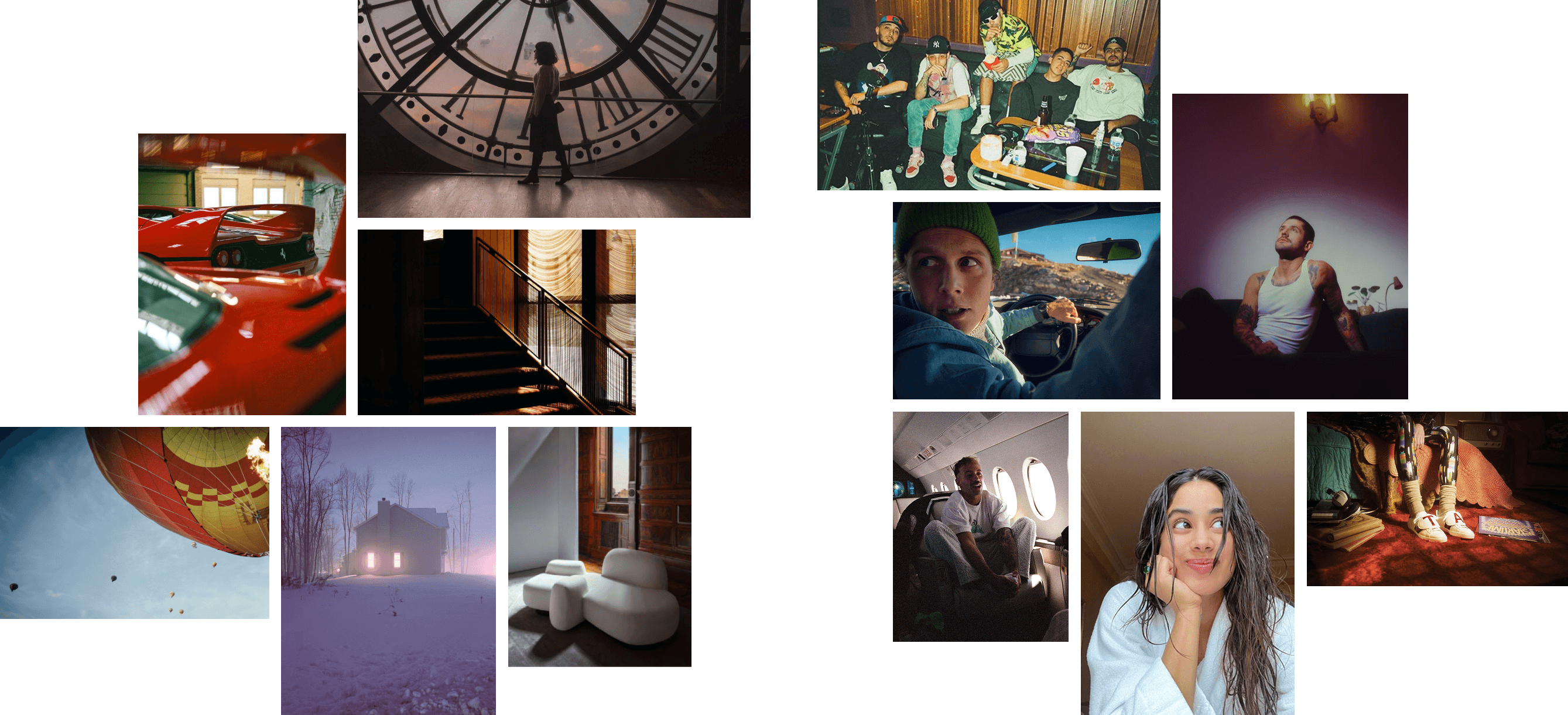
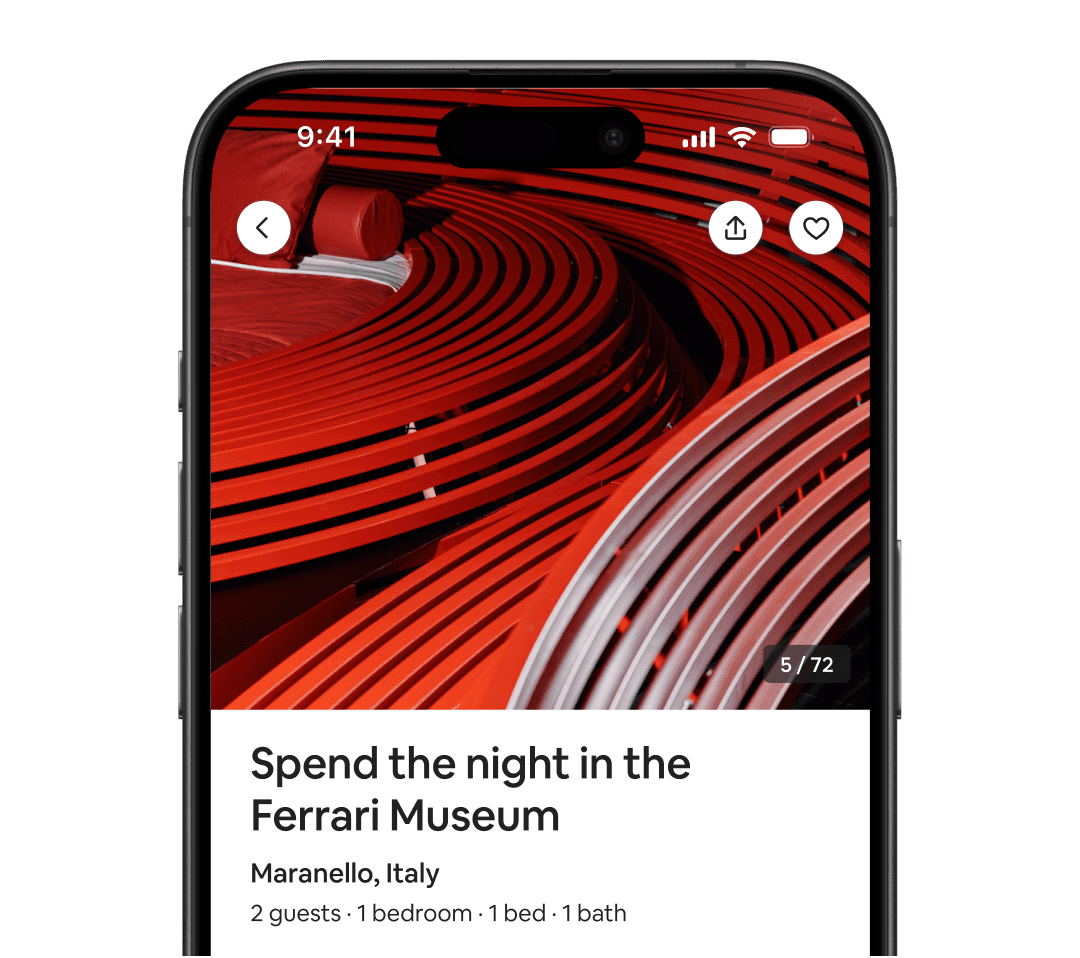
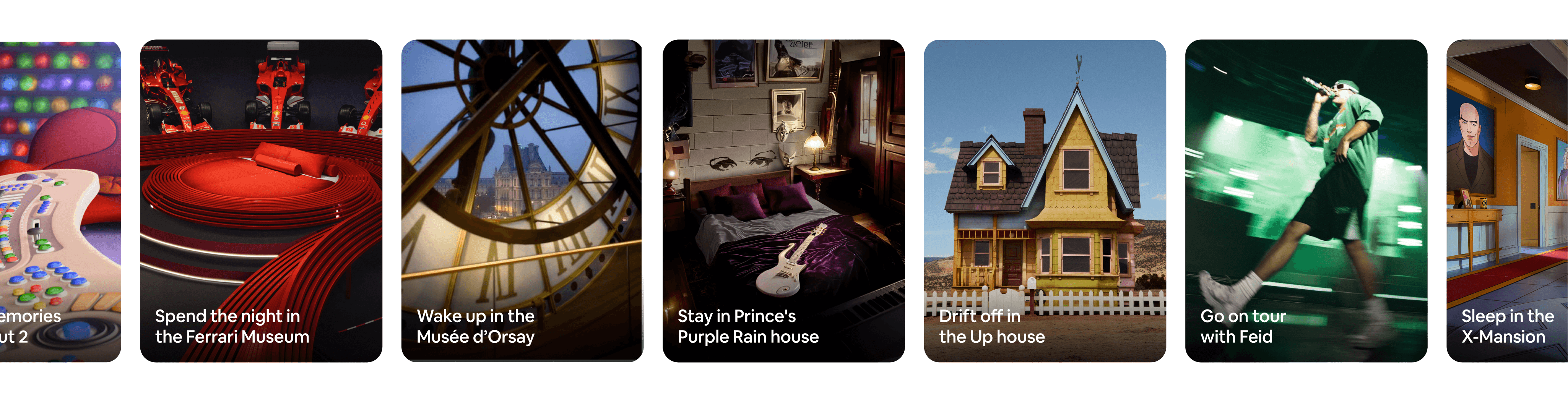
The Strategic Problem All Icons were based on cultural touchstones, whether in the form of a place, a person, or even a movie. Each Icon had its own distinct identity. Spend the night surrounded by F1 cars in the Ferrari Museum in Maranello, Italy; or in a room built behind the famous clock tower at Paris’s Musee D’Orsay during the Olympics opening ceremony. Enter Prince’s Purple Rain, staged at the house where the movie was filmed. The unimaginable was made real. Only a few people got to experience the Icons in person, but their footprint in culture was much larger. Despite the exclusivity of the offer, many people experienced the Icons through photography—specifically in the product, in the press, and on social media. The challenge became “how do we convey something this unique, complex, and experiential in a static medium?”
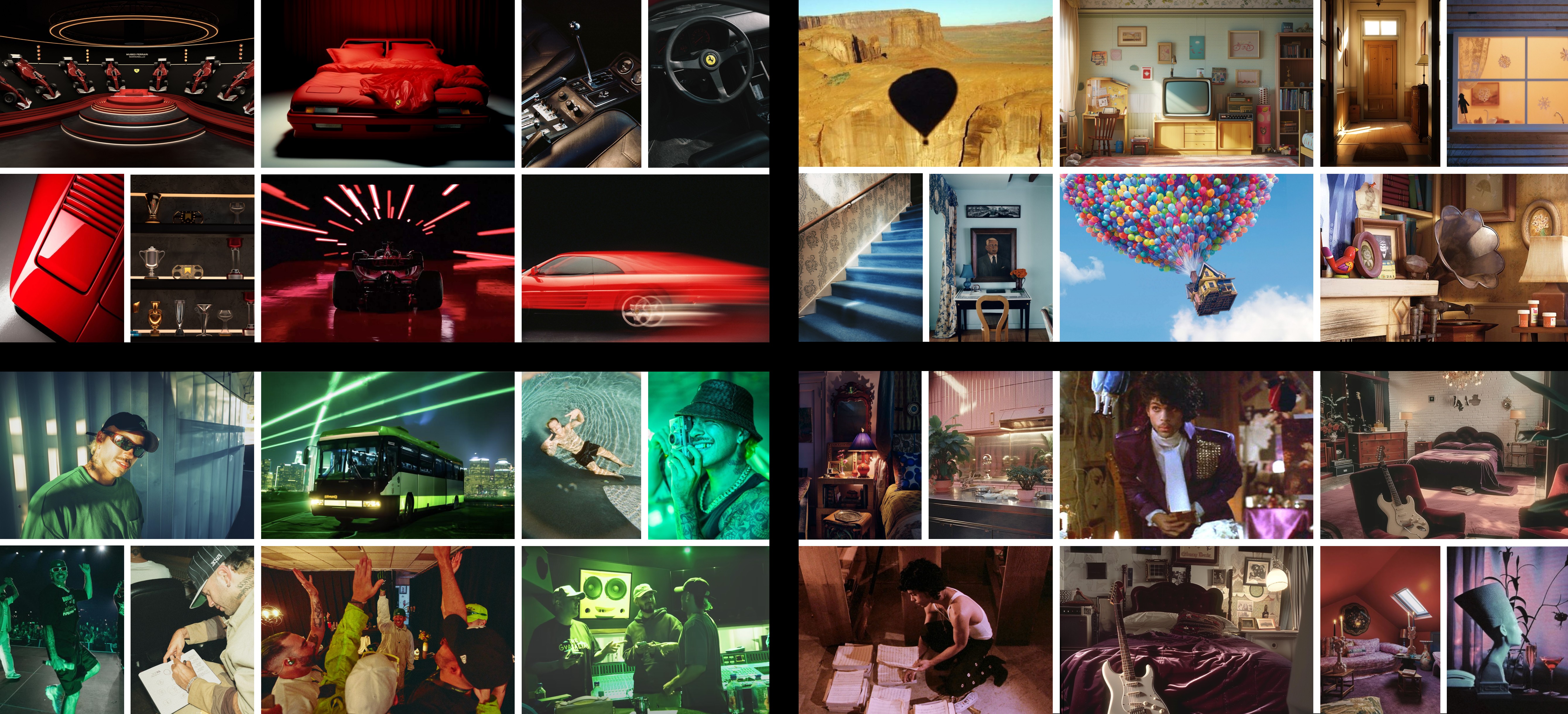
The Stylistic Framework For each Icon, internal collaboration established concrete direction around the color story, lighting, mood, photographic technique, and overarching goal of the imagery. Ferrari was defined as graphic, and confident in mood, with an emphasis on glossy surfaces and the iconic Ferrari Red; the Clocktower of the Musee d’Orsay celebrated a fusion of 1920s and modern-day Paris as the historical backdrop of the 2024 Olympic games through the use of muted color and soft, natural lighting; the goal of the Purple Rain house was to evoke the aesthetic of the film’s era with subtle atmospheric cues and analogue capture techniques.
From Set to Surfaces The photographic framework was designed not only to bring each Icon to life, but to withstand translation across product surfaces, media environments, and global placements. As the primary visual expression of the category, it became the connective tissue between in-app exploration, cultural amplification, and environmental expression. The challenge was no longer how to photograph an Icon—but how to operationalize its identity at scale without losing nuance.
Beyond the Launch Post-launch, these principles and frameworks defined how static imagery could systematically carry the weight of an experience designed to be felt, not just seen. By establishing clear visual principles, distinct Icon identities were able to coexist within a cohesive category expression. At its core, the work demonstrates how a clearly defined visual approach can translate the unique, immersive character of each Icon into imagery that feels accessible and transportive.